A recent IAPB blog post by Priya Morjaria, Head of Global Programme Development at Peek Vision and Assistant Professor at The International Centre for Eye Health, demonstrates the growing global momentum that is bringing access to eyeglasses to children in low- and middle-income countries.
READ THE FULL BLOG POST HERE
At EYElliance, we believe that sustianable change begins with reliable data. That’s why we’re excited to spotlight Peek Vision’s latest blog, “Check the Fridge First: Building Evidence-Based School Eye Health Programmes”, which highlights the importance of evidence-led school eye health (SEH) programming and the impact of the School Eye Health Rapid Assessment (SEHRA) tool.
Peek's SEHRA tool supports governments and implementers designing national-scale SEH programmes––assessing everything from vision needs to policy frameworks, human resources, supply chains, and service gaps. SEHRA builds a comprehensive picture of the landscape before interventions are rolled out.
EYElliance is proud to have co-led the SEHRA implementation in Uganda, in partnership with the Clinton Health Access Initiative (CHAI). The SEHRA conducted there is now the most representative school eye health survey in the country’s history. The findings have sparked inter-ministerial dialogue, shaped funding conversations, and are paving the way for a more coordinated, government-led SEH response.
As EYElliance COO Maggie Dawson shared, the assessment is already informing policy and guiding resources to where they’re needed most—ensuring no child is left behind because they can’t see clearly.
Peek’s post also showcases insights from SEHRAs conducted in India, Liberia, Pakistan, Ethiopia, and South Africa—underscoring how region-specific data can drive smarter, more equitable planning.
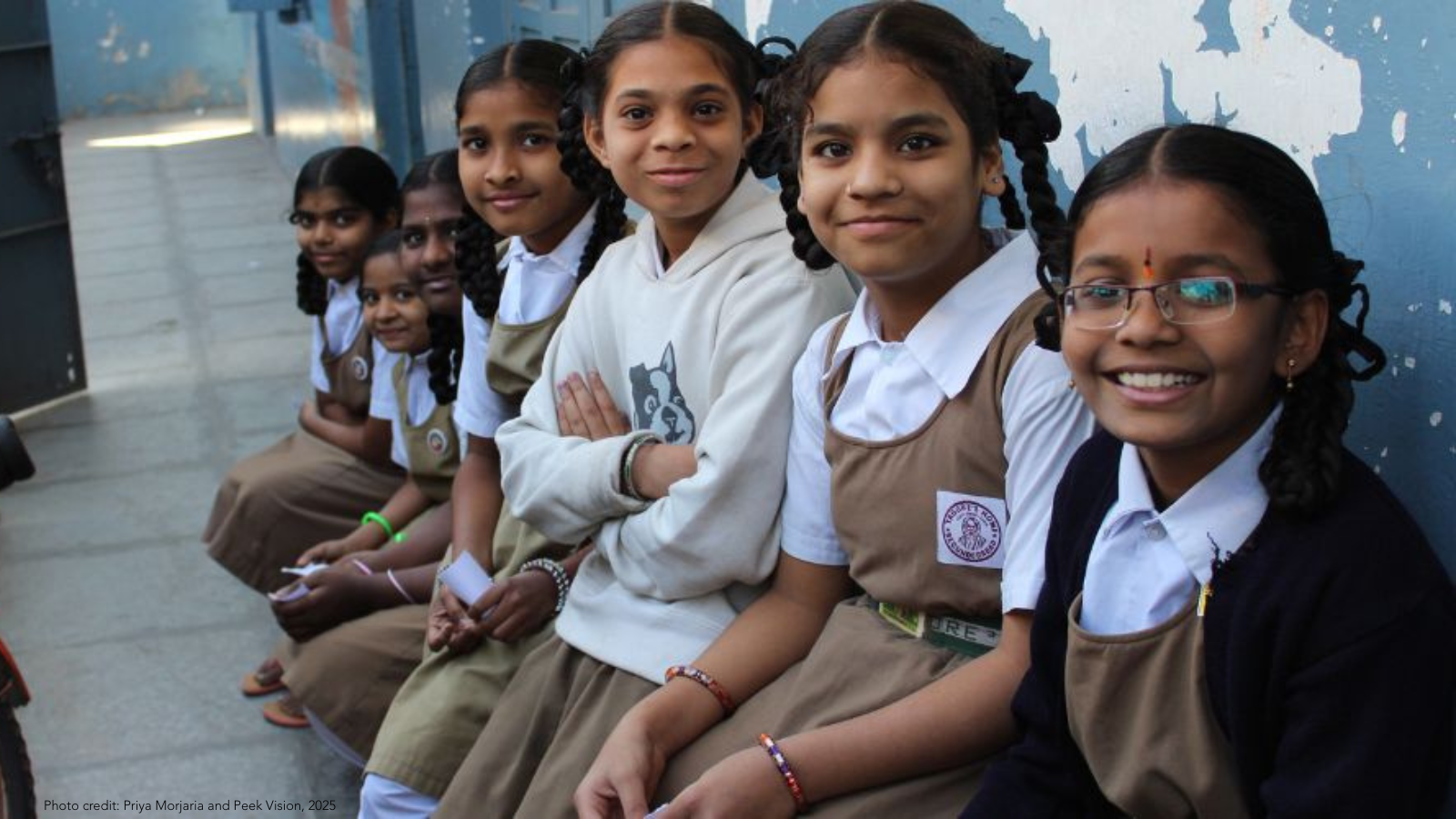
Photo credit: Priya Morjaria and Peek Vision, 2025