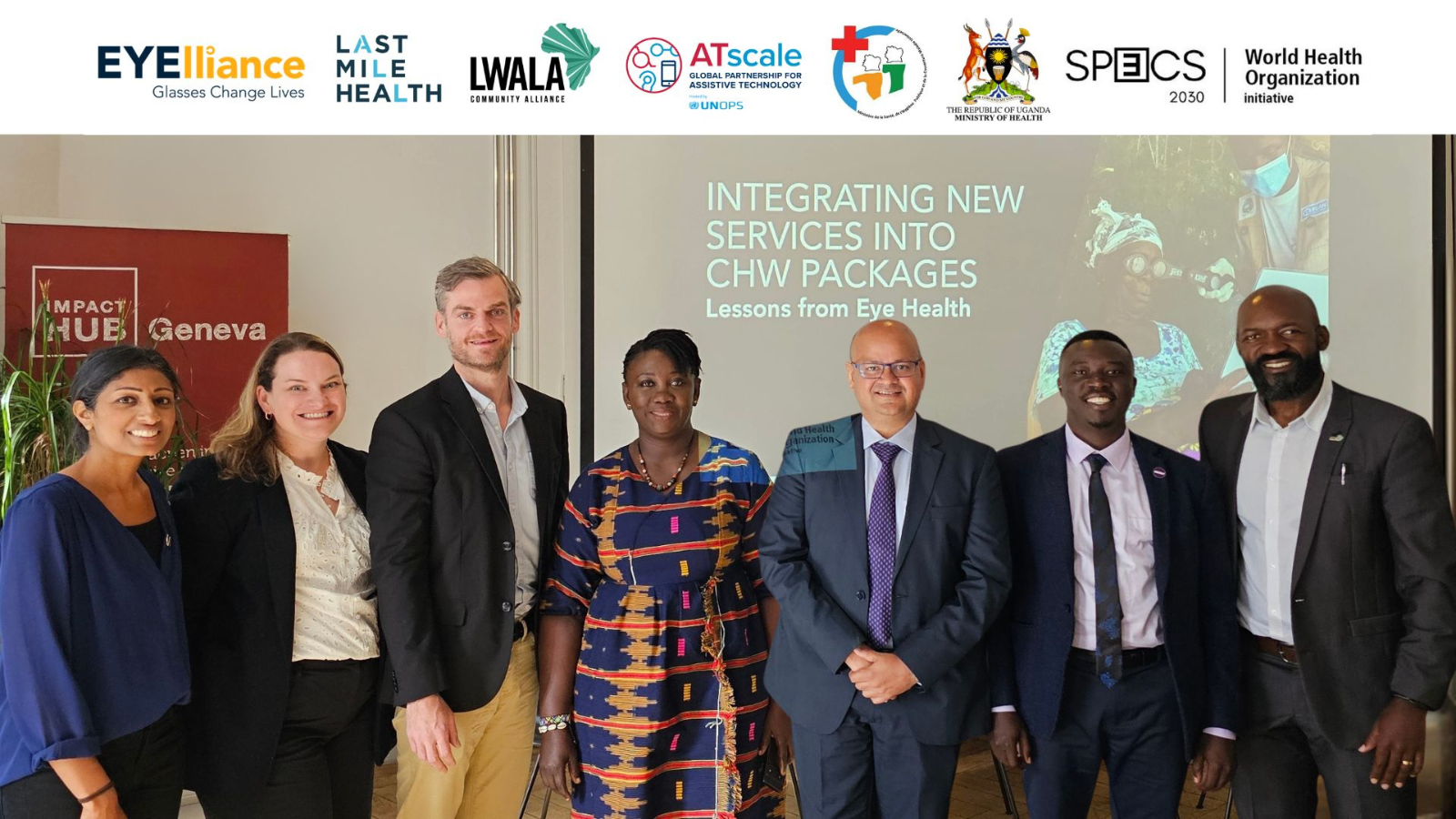
At a powerful World Health Assembly (WHA) side event convened by EYElliance on May 22, 2025, global health leaders came together to champion a collective goal: integrating new services into community health worker (CHW) packages––with eye health as a standout case.
The in-person gathering—hosted in Geneva during WHA78—explored how governments can effectively expand the scope of care at community level by highlighting a successful example of integrating a new service into CHW programs, spotlighting practical lessons, and discussing urgent next steps for making eye health and glasses accessible to millions through existing health systems.
WATCH A RECORDING OF THE SESSION HERE
Access a transcript of the session here.
“We’re no longer asking if eye care can be integrated into CHW packages,” said Maggie Savage Dawson, COO of EYElliance. “We’re asking how to do it in ways that are sustainable, government-led, and rooted in real community need.”
Key Takeaways
The event was attended by an esteemed panel of global health leaders including Maggie (Savage) Dawson, COO at EYElliance; Dr. Adjoba Françoise KADJA, Director of Community Health and Health Promotion at Côte d’Ivoire’s Ministry of Health; Dr. Jimmy Ochorin, Senior Medical Officer, Disability and Rehabilitation, Ministry of Health, Uganda; Dr. Stuart Keel, Technical Officer for Blindness Prevention at the World Health Organization SPECS 2030; Mallika Raghavan, MPH, Deputy Chief Program Officer at Last Mile Health; Kenneth Ogendo, Director of External Affairs, Policy, Advocacy & Partnerships at Lwala Community Alliance; and Dr Satish Mishra, Head of Global Programmes at ATscale, the Global Partnership for Assistive Technology.
Key takeaways from the event include:
- Build from what’s working: Strengthen and scale what already exists by integrating new services—like eye health—into established primary care and CHW systems, rather than creating parallel structures.
- Align with national priorities and health financing reforms: Ensure programs are embedded within national health strategies and budgetary frameworks to enable long-term sustainability and government ownership.
- Leverage innovative delivery models, technology, and data: Tools like digital health platforms, mobile vision screening devices, and real-time data systems can help extend the reach and effectiveness of CHW programs—especially in underserved communities.
- Focus on a pull model that responds to government and community demand: Design programs that are driven by the needs and priorities of governments and the communities they serve, creating stronger buy-in and more relevant, impactful services.
Eye Health: A Growing Public Health Priority
Dr. Stuart Keel, Technical Officer, Blindness Prevention at the World Health Organization SPECS 2030 initiative opened the event with a global perspective: “Non-communicable eye diseases are on the rise, and we need new strategies to meet demand. SPECS 2030 is helping countries build strong, quality refractive error services—many of which begin at the community level.”
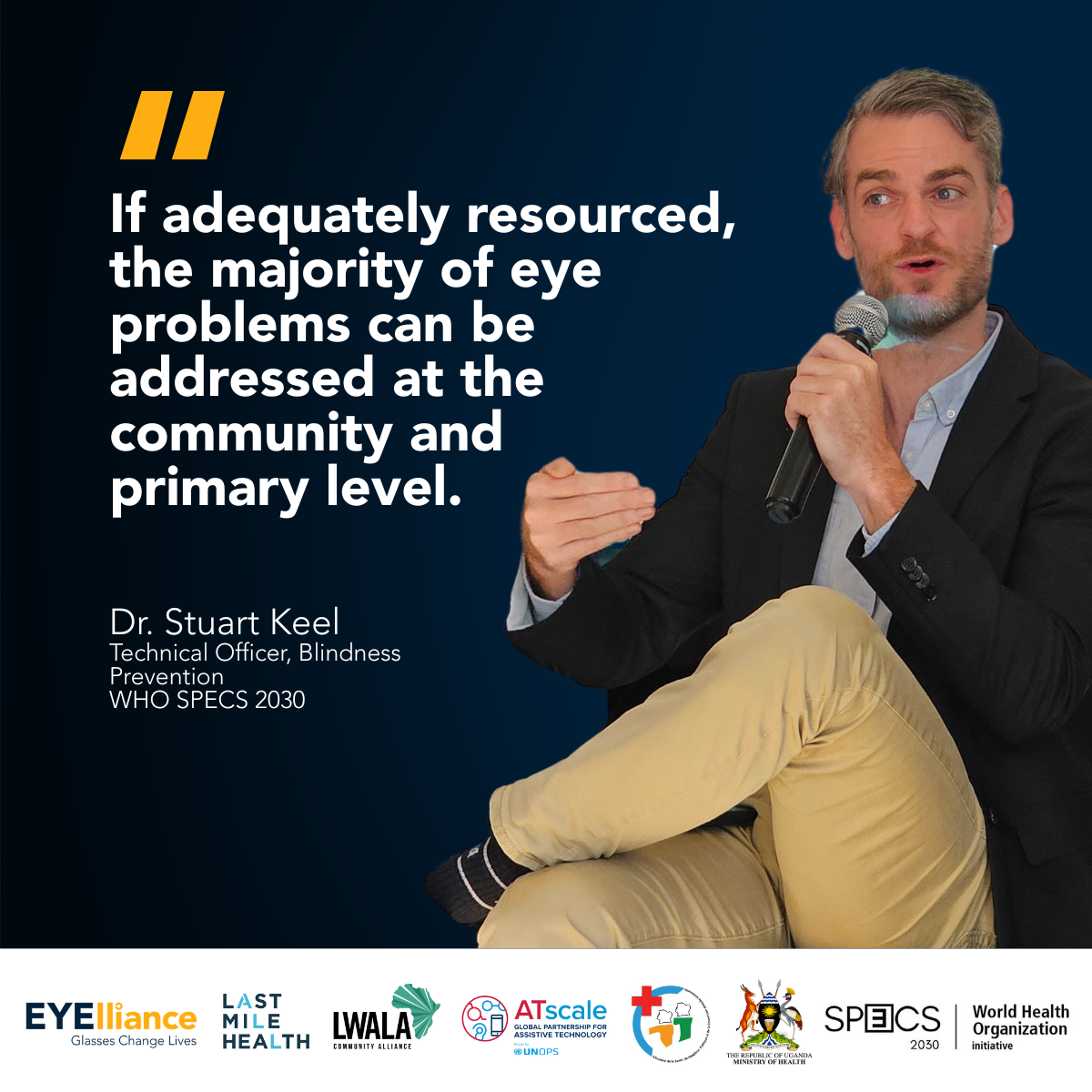
WHO SPECS 2030 is the World Health Organization’s global initiative to improve access to eye care and prioritize vision in health systems by 2030. EYElliance is proud to support this initiative and its goal of achieving universal eye health coverage.
Country Spotlights: From Pilots to Policy Shifts
From Uganda to Cote d’Ivoire to Ethiopia, government-led demonstration projects are already showing what’s possible:
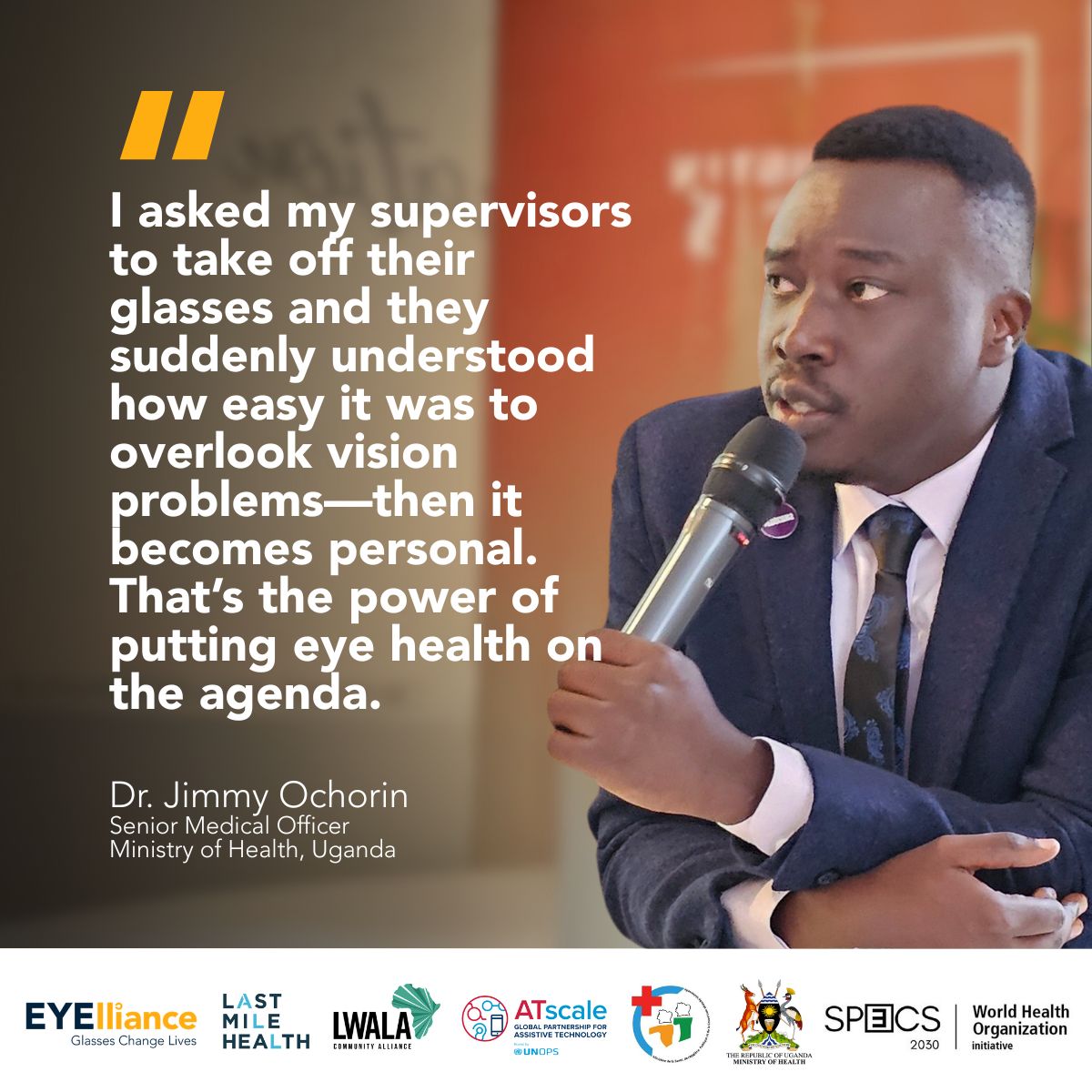
In Uganda, where 60% of the population depends on CHWs for their health care needs, the government is now prioritizing eye health thanks to data-driven advocacy from local partners. “We’ve seen how aligning with existing systems creates real traction,” said Dr. Jimmy Ochorin, Senior Medical Officer in Uganda’s Ministry of Health.
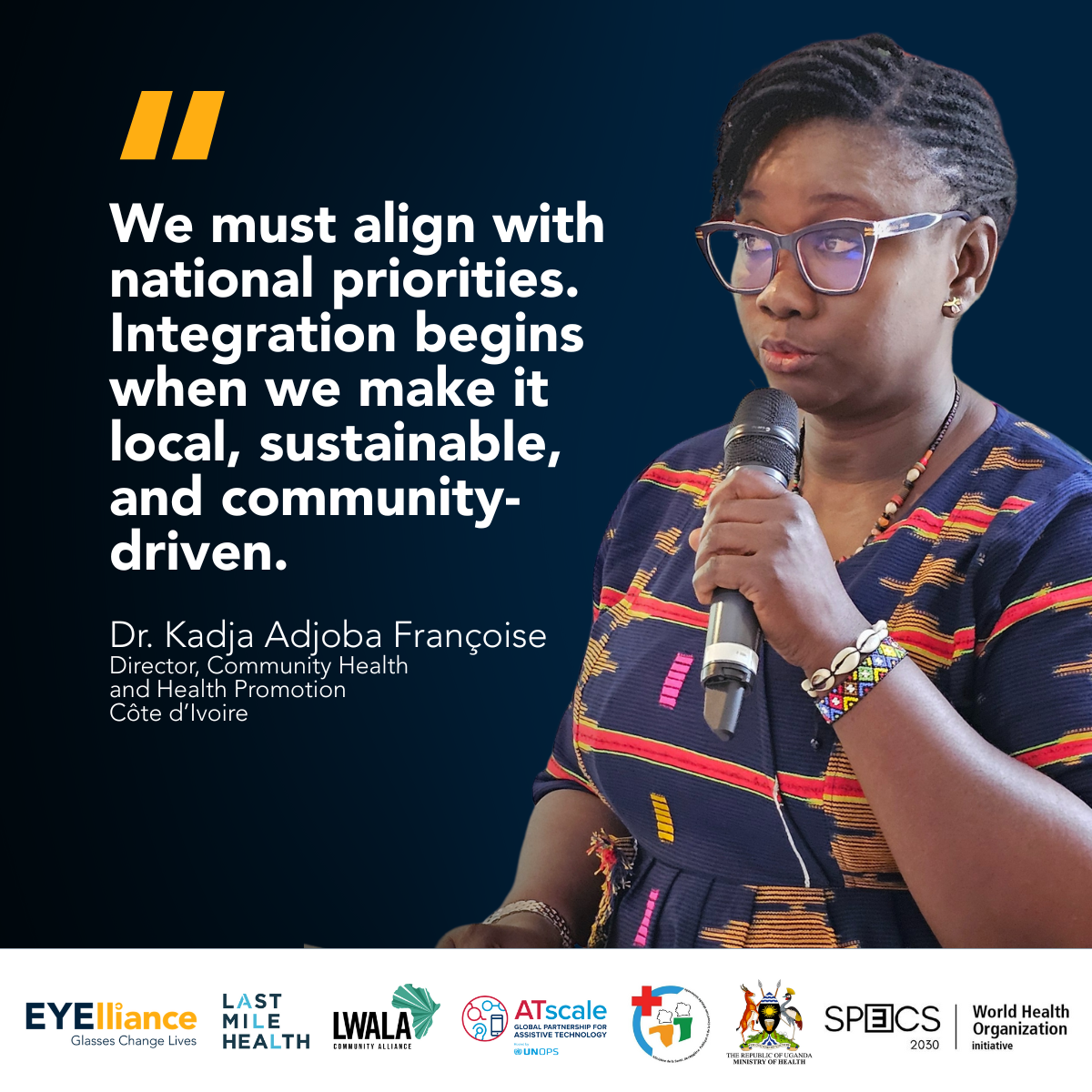
In Cote d’Ivoire, a pilot beginning this month will screen 42,000 people and distribute an estimated 12,000 pairs of glasses. Dr. Kadja Adjoba Françoise, Director of Community Health and Health Promotion in Côte d’Ivoire emphasized, “We need real data to support national-level integration—and this pilot gives us a roadmap.”
In Ethiopia, 1,200 health extension workers screened over 53,000 individuals, with nearly half receiving glasses. “Presbyopia doesn’t need to be a barrier to living a full life,” said Mallika Raghavan, Deputy Chief Program Officer at Last Mile Health. “Integration with non-communicable disease (NCD) services is key.”

The Path Forward: Integration and Government Leadership
The panel discussion made one thing clear: integrating eye health at scale requires policy alignment, accurate supporting data, and strong government leadership.
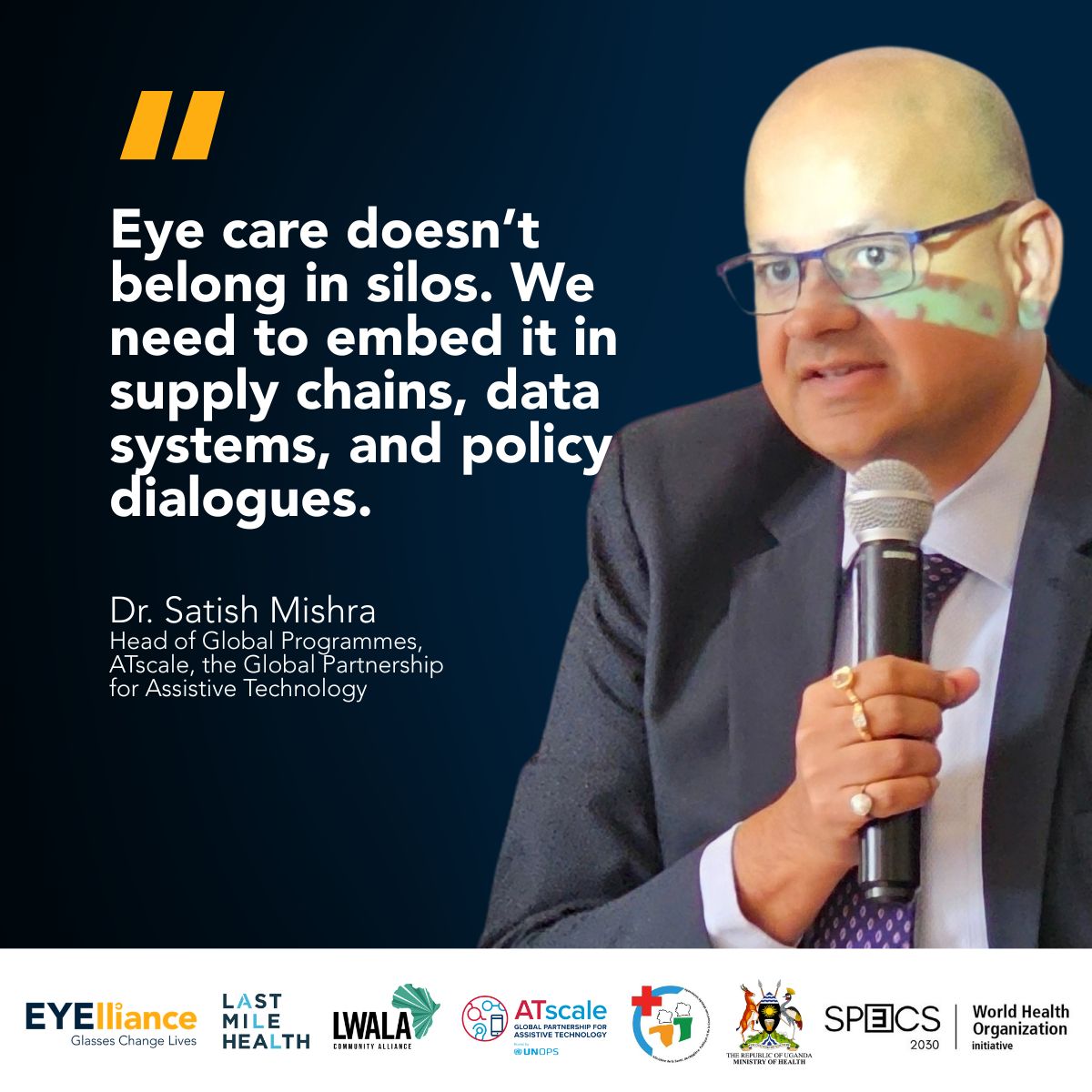
“Let’s move from a push model to a pull model—where governments and CHWs are at the center,” said Dr. Satish Mishra, Head of Global Programmes at ATscale. Various speakers also stressed the value of inter-country learning and coalition-building to accelerate progress.
Several next steps were identified, including developing national guidelines for distributing glasses through CHWs, integrating reading glasses into national priority assistive products lists, and deploying sustainable financing mechanisms.
A Call to Action
As the event concluded, the message was clear: the future of eye health is community-driven, government-led, and fully integrated into primary care.
“There’s real momentum now,” EYElliance’s Maggie Dawson closed. “Let’s keep going—side by side with ministries, communities, and CHWs—toward a world where no one is held back by uncorrected poor vision.”